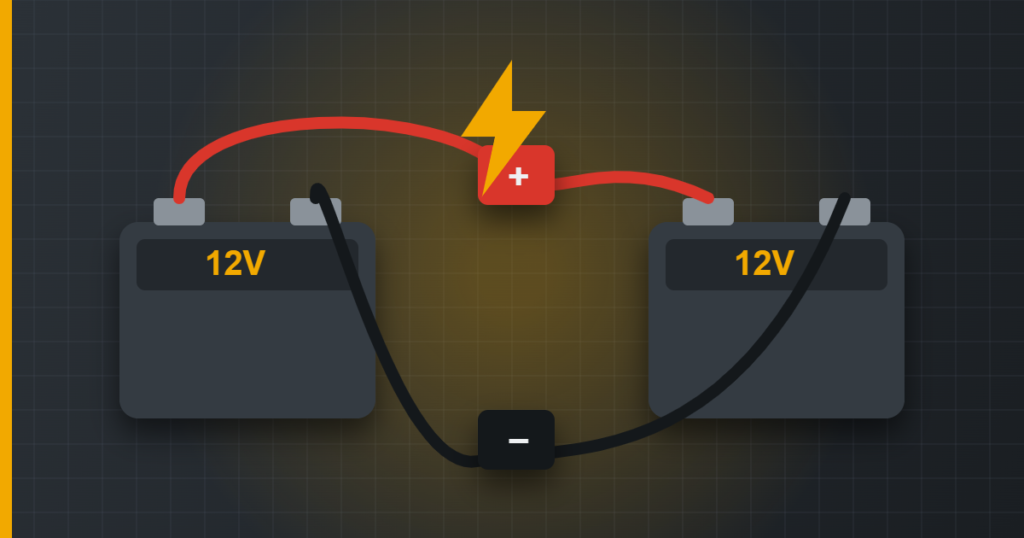
Quick answer: Connect the red positive clamp to the dead battery positive terminal. Then connect the other red clamp to the donor battery positive terminal. Next, attach the black negative clamp to the donor battery negative terminal and the remaining black clamp to an unpainted metal engine ground. Start the donor car to charge the dead battery, start the dead car, and disconnect all clamps in exact reverse order.
Read your vehicle owner manual for specific jump-starting steps and grounding locations. Keep open flames, sparks, and lit cigarettes far away from the engine bay. Never jump-start a battery that is cracked, leaking acid, or frozen, as doing so can trigger an explosion. Keep positive and negative cable clamps from touching each other while connected to power. Always wear protective eye goggles and heavy-duty work gloves.
What Do You Need to Jump-Start a Car?
To jump-start a car safely, you need jumper cables with a second vehicle or a portable jump starter, along with gloves and eye protection. Having these tools ready allows you to handle a dead battery quickly without damaging car electronics.
Jumper cables feature thick insulated copper wires with heavy spring clamps on both ends. Red clamps attach to positive battery terminals. Black clamps connect to negative terminals or unpainted metal ground points. Jump-starting with cables requires a donor car with a healthy twelve-volt battery parked close enough for the cables to reach.
A portable jump starter provides starting power without needing a second vehicle. This device is a compact lithium battery pack with built-in safety circuits. Portable jump packs allow solo drivers to restart cars safely in tight spaces or remote locations.
Safety gear protects you during battery service. Heavy work gloves shield your skin from battery acid residue and sharp metal edges. Protective eye goggles shield your eyes against unexpected chemical sprays or electrical sparks.
Hybrid vehicles require special care when jump-starting. A hybrid car contains a smaller twelve-volt auxiliary battery located under the hood fuse box or cargo floor. This battery powers internal computer modules to activate the main hybrid system. However, hybrid vehicles should not jump-start other cars. Their twelve-volt batteries are small reserve units rather than heavy cranking batteries.
What Should You Check Before You Start?
Before attaching any cables, you must inspect the dead battery for damage, verify both vehicles are off, and position the cars safely. Taking these precautionary steps prevents short circuits and protects car computers.
- Read the owner manual: Locate the designated positive battery terminal and the unpainted metal grounding point recommended by your car manufacturer.
- Inspect the dead battery: Check the casing for cracks, bulging sides, leaking liquid acid, or signs of internal freezing. Jumping a damaged or frozen battery can cause an explosion.
- Position the donor vehicle: Park the donor car close to the dead car so cables reach easily. Ensure the metal body panels of the two cars do not touch.
- Turn off vehicles and accessories: Turn off ignition keys, headlights, radios, heaters, air conditioning, and seat warmers in both cars. Turning off accessories protects car computers from sudden voltage surges.
- Set parking brakes: Engage emergency parking brakes on both vehicles. Place automatic transmissions in Park and manual transmissions in Neutral.
- Put on protective gear: Put on safety glasses and work gloves before touching battery terminals or handling cable clamps.
How Do You Jump-Start a Car With Jumper Cables?
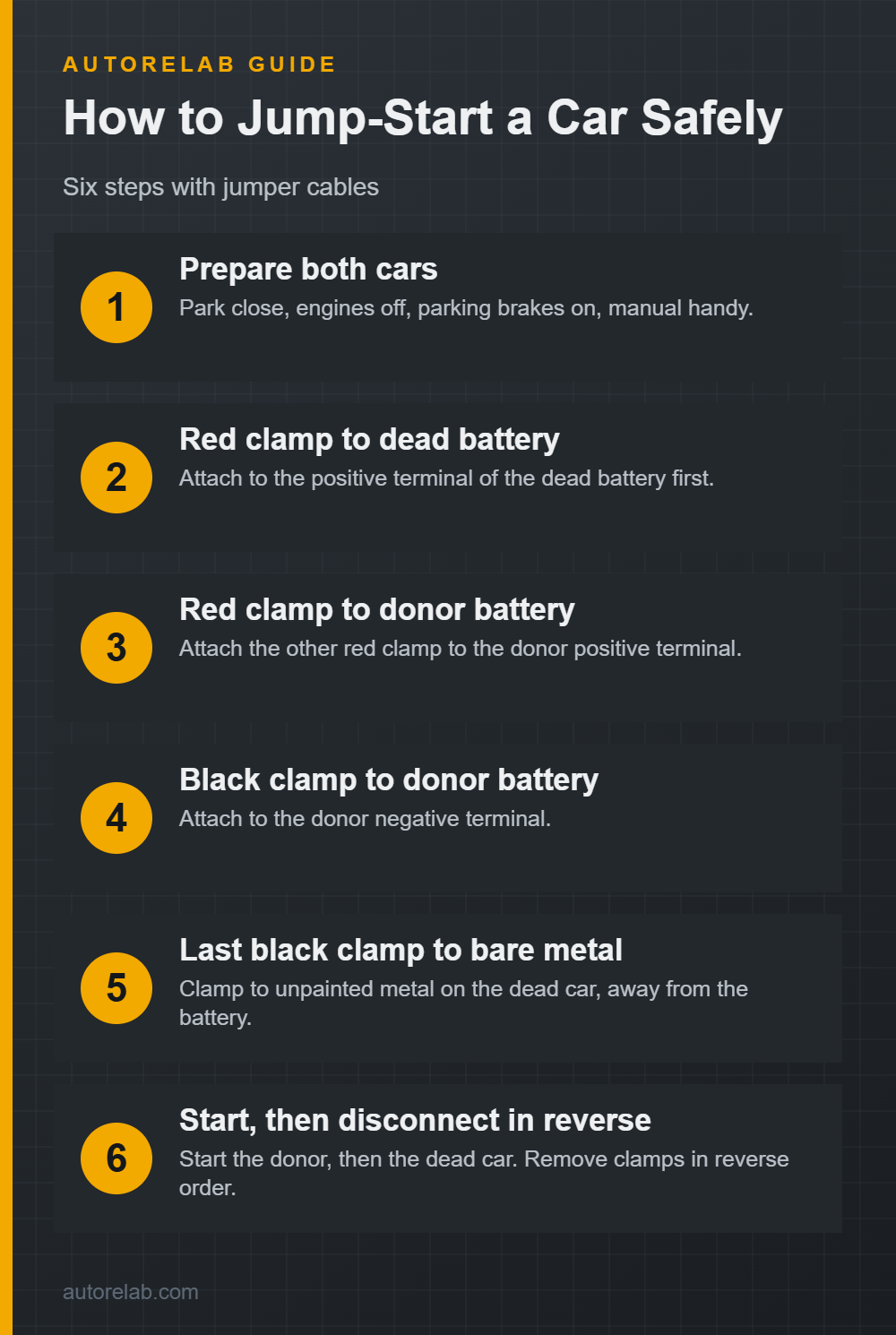
Jump-starting a car with jumper cables requires connecting the four clamps in a specific sequential order to prevent sparks and battery explosions. Following this exact connection sequence ensures electrical power transfers safely from the donor vehicle.
- Connect the first red clamp to the dead battery: Attach the positive red clamp to the positive terminal of the dead vehicle battery. The positive post is marked with a plus sign and usually has a red plastic cover.
- Connect the second red clamp to the good battery: Fasten the opposite red clamp to the positive terminal of the donor vehicle battery.
- Connect the first black clamp to the good battery: Attach the negative black clamp to the negative terminal of the donor vehicle battery.
- Ground the second black clamp: Fasten the remaining black clamp to an unpainted metal engine bracket on the dead vehicle, far away from the battery. Attaching the final clamp to bare metal keeps connection sparks away from escaping hydrogen gas.
- Start the donor vehicle: Run the donor car engine for three to five minutes to send charging current into the dead battery. Run the donor engine speed slightly higher if the battery is deeply discharged.
- Start the dead vehicle: Turn the ignition key of the dead vehicle to crank the engine. If the engine cranks slowly, let the donor car idle a few minutes longer before trying again.
- Disconnect the cables in reverse order: Leave the newly started engine running and carefully disconnect the clamps in exact reverse order. Remove the black clamp from the grounded metal on the jumped car first. Next, remove the black clamp from the donor battery. Then remove the red clamp from the donor battery. Finally, remove the red clamp from the dead car.
How Do You Jump-Start a Car With a Portable Jump Starter?
Using a portable jump starter involves plugging smart clamps into the lithium pack, connecting the clamps, powering on the device, and starting the car. Compact jump packs use internal lithium cells and safety circuits to deliver starting current safely.
- Verify jump starter charge: Check the battery indicator lights or digital screen on your jump box to confirm it has sufficient power.
- Plug clamps into the jump pack: Insert the cable assembly plug into the jumper port on the portable unit. Smart clamp plugs feature keyed connectors that fit into the port in only one direction.
- Connect the positive red clamp: Fasten the positive red clamp securely onto the positive battery terminal of the dead battery.
- Connect the negative black clamp: Connect the negative black clamp to an unpainted metal engine bracket away from the battery. When using smart jump packs with built-in spark protection, you can connect the black clamp directly to the negative battery terminal.
- Power on the jump starter: Press the power button on the jump pack to activate safety circuitry. The unit checks for proper connection and displays a green light when ready.
- Use manual override if needed: If the vehicle battery has near-zero voltage, the jump pack safety sensors may fail to detect the battery automatically. Hold the manual override or boost button for three seconds to force starting power directly to the clamps.
- Start the vehicle engine: Turn the ignition key or press the engine start button inside the car. Turn off the jump pack power switch immediately once the engine starts.
- Remove clamps safely: Disconnect the black negative clamp first. Remove the red positive clamp next. Pack the jump starter into its storage bag.
Why Does the Order of the Clamps Matter?
The specific clamp connection sequence matters because connecting cables in order prevents electrical short circuits and eliminates spark risks near explosive battery gas. Understanding the electrical reasoning behind clamp order helps drivers stay safe.
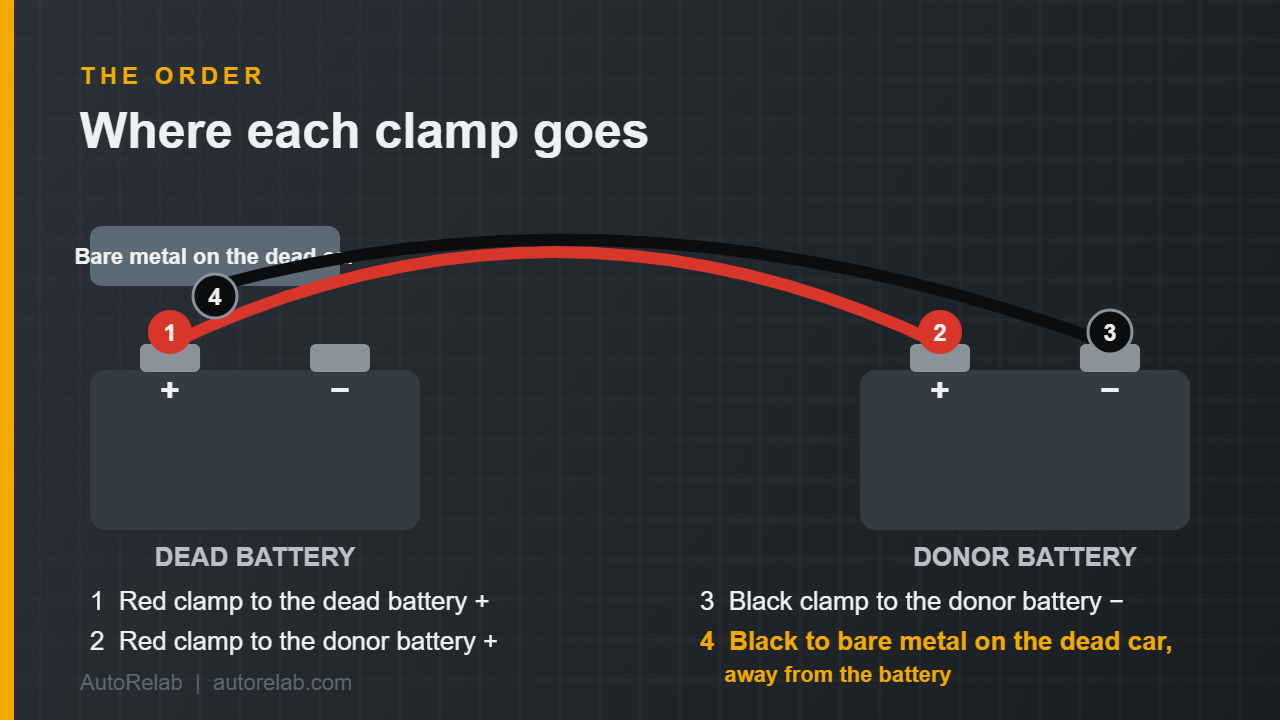
Connecting positive red clamps before negative black clamps protects the car electrical system from short circuits. While handling positive cables, the car frame remains ungrounded. If negative clamps were connected first, the entire car body would become part of the active electrical circuit. Touching a live positive clamp against metal body parts would cause an immediate short circuit and heavy sparks.
The final negative clamp placement protects against battery explosions. Lead-acid batteries produce flammable hydrogen gas during chemical reactions. When completing an electrical circuit, a small spark naturally occurs at the final connection point. Attaching the final black clamp to an unpainted engine bracket places that spark far away from escaping hydrogen gas.
Standard cable procedures vary slightly depending on whether you connect to the dead vehicle or donor vehicle first. You can attach the red positive clamp to the dead battery first, or connect to the donor car first. Both methods work safely as long as you connect positive terminals before negative terminals.
Portable jump starters also allow different negative clamp connections depending on device design. Connecting the negative black clamp of a jump box to an unpainted metal engine bracket remains the safest choice for basic cables. However, modern smart jump packs feature built-in reverse polarity and spark protection. This permits direct connection to the negative battery terminal when allowed by the manufacturer product manual.
What Should You Do Right After the Car Starts?
Immediately after the engine starts, disconnect the cable clamps in exact reverse order while keeping the engine running. Disconnect the black negative clamp from the grounded metal bracket on the jumped car first. Next, remove the black negative clamp from the donor battery terminal. Then remove the red positive clamp from the donor battery terminal. Finally, disconnect the red positive clamp from the newly started car battery post.
Leave the newly started vehicle running to allow the charging system to replenish the battery. Your car alternator requires time to pump electrical current back into the battery after a heavy discharge. Shutting off the engine right away will leave the battery flat, forcing you to repeat the entire jump-starting process.
Drive the vehicle continuously for at least twenty minutes on the highway to charge the battery properly. Short commutes and city driving with frequent stop-and-go traffic do not give the alternator enough time to finish recharging. Highway driving maintains steady engine speed, allowing the alternator to restore battery power efficiently.
Take the vehicle to an auto parts store or service shop to have the battery tested after driving. Diagnostic battery testers evaluate overall battery health and state of charge to determine if the battery requires replacement. A battery that tests weak should be replaced rather than jumped again and again.
Why Does a Jump Start Sometimes Fail?
A jump start fails when underlying mechanical or electrical failures prevent power from reaching the engine starter. Recognizing specific symptoms helps you determine whether your battery, alternator, starter motor, or electrical connections cause the problem.
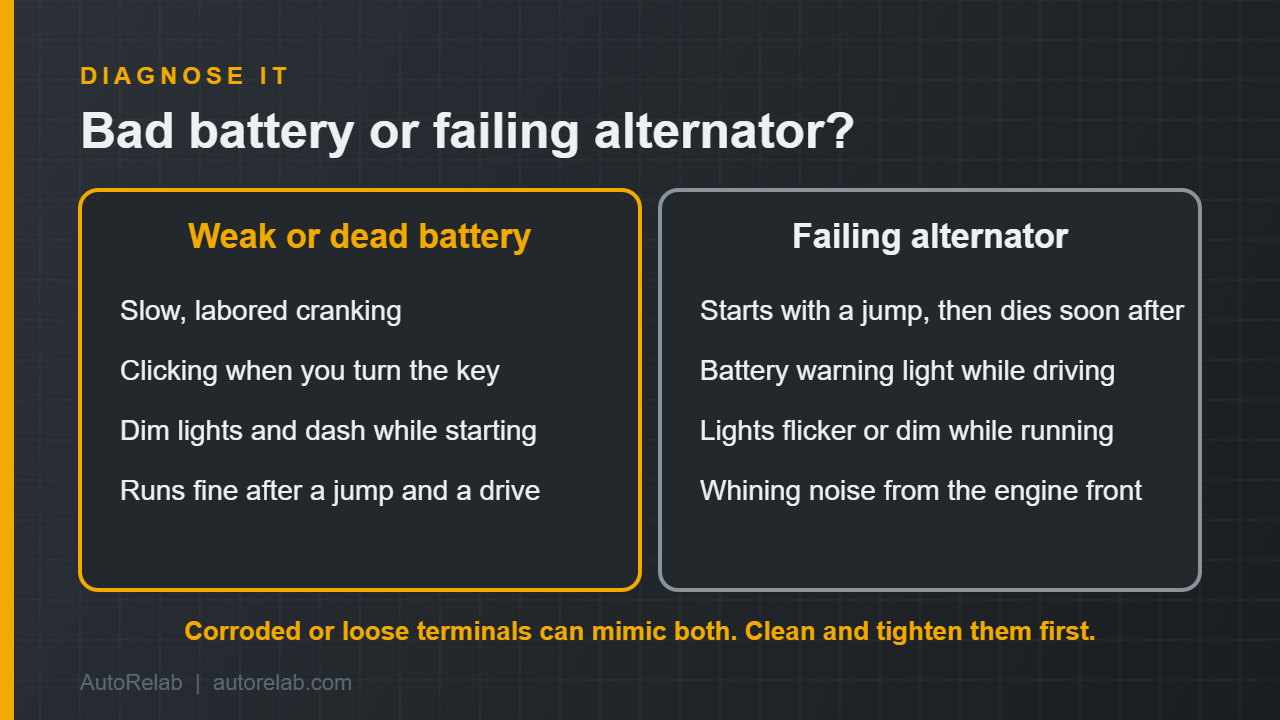
A deeply discharged or ruined battery cannot accept electrical current during a jump start. When a battery is almost completely flat or has internal damage, some jump packs cannot detect it at all. If the battery casing is swollen, leaking acid, or internally shorted, the battery will refuse to hold charge despite multiple starting attempts.
A faulty alternator prevents the vehicle from staying running once jumper cables are disconnected. The alternator generates electricity to power vehicle systems and charge the battery while the engine operates. If the car starts with cables connected but stalls immediately after removing the clamps, the alternator is the likely cause, because it is not producing power.
Corroded battery terminals create heavy electrical resistance that blocks cranking current from reaching the engine. Corrosion appears as white powder or blue-green crust around metal battery posts. This buildup acts as an insulator, preventing cable clamps from making solid contact with the battery.
A failing starter motor creates clicking noises or fails to turn the engine despite full voltage. The starter motor is an electric motor that physically cranks the engine flywheel during ignition. If your battery tests good and cables are secure but turning the key produces only a sharp click, the starter motor or its wiring is the likely problem.
How Do You Jump-Start Newer Cars, Hybrids, and Electric Vehicles?
Modern vehicles require checking the official owner manual before jump-starting to protect sensitive computer modules. Newer cars contain dozens of electronic control units that monitor engine, transmission, and body functions. Applying incorrect voltage or reverse polarity can instantly damage expensive onboard computers.
Many modern cars position the twelve-volt battery away from the engine bay, such as inside the rear trunk or cargo floor. Manufacturers install dedicated jump-starting terminals under the hood inside the engine bay fuse box. A red plastic cap covers the positive remote terminal, while a silver metal bar on the engine block serves as the designated negative ground.
Hybrid vehicles feature a smaller twelve-volt auxiliary battery located under the cargo floor or fuse box. This auxiliary battery powers internal computer modules to activate the main hybrid system and illuminate the dashboard Ready indicator light. Once the Ready light turns on, the hybrid system operates and you can safely remove the jump starter.
However, hybrid vehicles should never be used to jump-start another vehicle. The twelve-volt battery in a hybrid is a small reserve unit intended only to power computer modules, not a heavy cranking battery. Using a hybrid to jump-start a traditional gas engine can overwhelm the auxiliary battery and damage sensitive hybrid electronics.
What Common Mistakes Should Drivers Avoid?
Avoiding common diagnostic errors prevents electrical damage and keeps you safe during roadside repairs. Keep these six crucial mistakes in mind whenever attempting a jump start.
- Connecting clamps in reverse polarity: Attaching positive red clamps to negative terminals causes severe sparks, blown fuses, and damaged vehicle computers.
- Touching live clamps together: Allowing positive and negative metal clamps to touch while connected creates dangerous short circuits and electrical arcs.
- Turning off the engine immediately: Shutting off the vehicle right after starting prevents the alternator from restoring battery charge.
- Ignoring heavy terminal corrosion: Attempting to jump a battery covered in white powder blocks electrical contact and prevents current flow.
- Using a hybrid vehicle to jump another car: Connecting jumper cables from a hybrid car to a dead traditional car can overwhelm the hybrid battery.
- Jumping a frozen or cracked battery: Applying power to a leaking or frozen battery casing risks triggering a hazardous battery explosion.
Frequently Asked Questions About Jump-Starting Safely
Can You Jump-Start a Car in the Rain?
Yes, you can usually jump-start a car in the rain if you keep the clamps and battery terminals as dry as you can. Twelve-volt power is low, but water can still cause shorts and corrosion, so wipe the terminals, keep the cable ends out of puddles, and call for help in heavy rain or standing water.
How Long Should the Cars Stay Connected?
The donor car and dead car should stay connected for three to five minutes before attempting to crank the engine. This idle time transfers electrical charge into the depleted battery so it can assist the starter motor during ignition.
Can a Jump Start Damage Vehicle Electronics?
Yes, an improper jump start can damage sensitive vehicle electronics if you reverse clamp polarity or cause sudden voltage surges. Modern electronic control modules operate on delicate voltage thresholds, so using spark-proof jump tools and following exact clamp sequence protects car computers.
How Many Times Can You Jump-Start Before Replacing the Battery?
You should replace your car battery if it requires more than one or two jump starts within a short timeframe. Repeatedly jump-starting a weak battery damages internal lead plates and signals that the battery can no longer hold an electrical charge.
Can You Jump-Start With the Engine Running on the Donor Car?
Yes, keeping the donor car engine running is the standard method because its alternator supplies steady charging current to the dead battery. Running the donor engine prevents draining the good battery while cranking the stalled vehicle.
Is a Portable Jump Starter Safer Than Jumper Cables?
Yes, a portable jump starter is generally safer than traditional jumper cables because it features built-in reverse polarity and spark-proof safety circuits. Portable units also eliminate the risk of damaging a second donor vehicle’s electrical system.
When Should You Call for Professional Help?
You should call for professional roadside assistance whenever a jump start fails after multiple careful attempts. If the engine refuses to turn over, cranks very slowly, or emits grinding noises, the issue involves a failed starter motor or mechanical engine damage. Calling a certified technician prevents further electrical harm.
Professional assistance is also necessary if you spot physical battery damage like cracked casings, swelling, or leaking acid. Attempting to jump a compromised battery creates a severe hazard. Additionally, if warning lights flash rapidly or electrical smells occur, professional towing prevents computer damage.
Keeping a portable jump starter stored in your trunk provides reliable emergency starting power wherever you travel. Compact lithium jump packs give you complete independence. They allow you to restart a dead battery safely without waiting for a donor vehicle or roadside assistance.
Ready to buy one? See our guide to the best portable jump starters, with six picks compared.
Last reviewed: November 1, 2026.